Skip to content

Careers

What it is actually like here

Not the values poster. The rota, the paperwork, the drive between visits and what happens when something goes wrong.

Most people who leave care work do not leave because they stopped caring. They leave because the job was made impossible.

Rounds built with no travel time in them. Visits shortened to make the maths work. Turning up to a house with no idea what happened yesterday. Nobody answering the phone when something is wrong. Every one of those is an organisational failure being paid for by the person in the tabard.

We are a small company and we cannot pretend to have solved every one of them. But they are the specific problems we have built the organisation to avoid, and this page is about how.


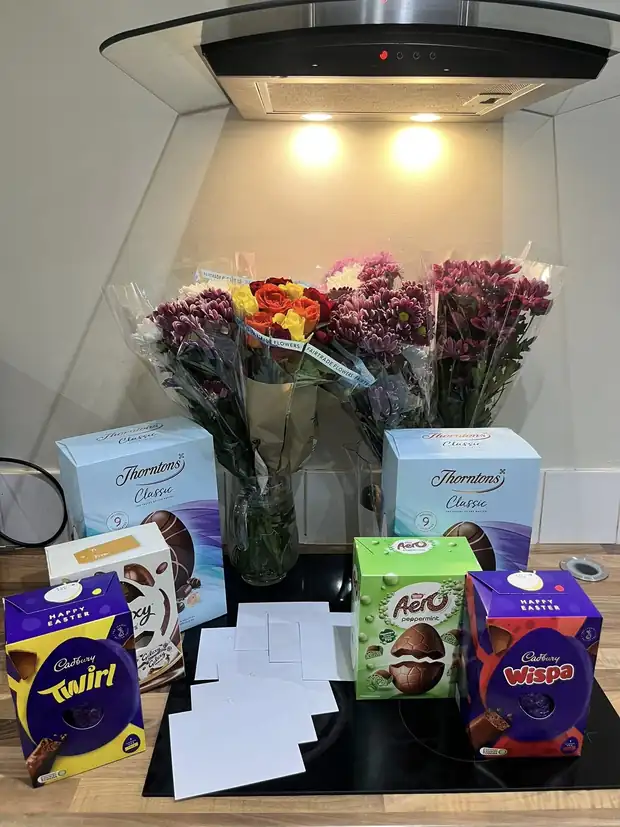
Easter eggs and flowers arranged on a kitchen counter
Working here

A team people stay with.

Day to day

Six things you can expect

Your round is local

We work out of Bretby, between Burton and Swadlincote. Rounds are built to keep travel between visits short — partly because it is better for the people we support, and partly because time in the car is the least rewarding part of anyone's day.

Visits are the length they say

If the plan says 45 minutes, that is what the round is built around. We are not going to hand you a schedule that only works if every visit is cut short and you never stop for lunch.

You have the information you need

Care plans and visit notes live in Birdie. You arrive knowing what happened yesterday, what has changed and what matters to the person — rather than piecing it together at the door.

You are not on your own

Small team, reachable management. If something is not right at a visit, there is someone to call who can actually make a decision about it.

The standards are clear

Policies and procedures come through QCS, so what is expected of you is written down rather than absorbed by osmosis. That protects you as much as it protects the people we support.

Learning that continues

Ongoing e-learning through Lumis, assigned to your role rather than a one-off induction that is never revisited.

Joining

What the process involves

  • You register your interest through the form — two minutes, straight to us.
  • We get in touch to talk about what you are looking for and what we have.
  • An informal conversation, in person where we can.
  • Enhanced DBS check, identity and right-to-work verification.
  • References requested and followed up.
  • Induction completed before you work independently.

On pay and terms

We have deliberately not published pay rates, holiday or pension details on this website. Not because they are bad, but because a headline figure with conditions attached is how a lot of care recruitment works and we would rather have the real conversation with you directly.

Tell us about yourself

No CV needed to start the conversation.

Fields marked with an asterisk are required. Please do not attach a CV here — we will ask for one at the right point.

So we can see which visits would be a sensible travel distance.

Experience is welcome but not essential for every role.

For example: weekday mornings, alternate weekends, school hours.

Or call 07720 829727

Honest questions about the job

What does a typical day look like?
Visiting care clusters around the times people need support — mornings for getting up and washed, lunchtimes for meals and medication, evenings for settling down. Most rounds are built around those peaks, with your visits grouped geographically so you are not crossing town between calls.
Will I always visit the same people?
That is what we aim for. Continuity is better for the person receiving care and it makes your job far easier — you notice changes because you know what normal looks like for them. Leave and illness mean it cannot be absolute, but it is the default we build towards.
What if I am running late?
You tell us and we tell the family. Nobody is expected to make up time by cutting the next visit short. If a round is consistently running late, that is a rota problem for us to fix, not a personal failing for you to absorb.
What if I am asked to do something I am not trained for?
You decline, and you tell us. That is not being difficult — it is exactly what our policies require. We provide medication support as set out in a care plan; we are not a nursing service and we do not administer injections. If a person's needs have moved beyond our scope, we need to know so it can be escalated properly.
What support is there if a visit goes badly?
Difficult visits happen — a fall, a safeguarding concern, someone who is distressed or hostile. There is a procedure for each of those, and there is someone to speak to afterwards. Being expected to just get on with it is how people burn out.
Do you offer training if I am new to care?
Yes. Induction comes before independent working, and ongoing learning is assigned through Lumis. We recruit for temperament first — the practical skills are teachable to the right person.

Want to talk it through first?

Call 07720 829727 and ask whatever you want to ask. No application, no commitment.